
Looking for Your Next Career Move?
No matter where you are in your career, there comes a time when you wonder if a change is necessary. In this post I share a simply approach to finding your way to a career path that brings you joy and satisfaction.

Me: What do you want to be when you grow up?
My five-year-old daughter: I want to be a doctor, police officer, firefighter, artist, ballet dancer, farmer, the president, and...hmm.
No matter where you are in your career, there comes a time when you wonder if a change is necessary. You may consider changing organizations, seeking a different role, or leaping into a different profession altogether. This condition of wonderment was on full display for me as I recently participated in a panel discussion for a class of educational leadership doctoral students. The course was full of mid-career educators and administrators pursuing a doctorate to open doors in their career. Toward the end of the panel discussion one of the educators posed the question, 'How do you know when to take the next move in your career?'. My response may have surprised a few students, although I don’t believe it was profound. It was merely based on nearly two decades of seeking the same answer for myself.Consequently, I believe that I have finally arrived at a response that guides my career moves and keeps me fulfilled. I think that before we seek a new career opportunity, we should stop trying to “follow our passion” and depending so much on our jobs for fulfillment. It doesn’t matter what career move you make if you seek opportunities to arrive at a “professional nirvana,” you may find yourself looking for new jobs far too often. After all, we don't find our passion, we develop it over time. In fact, we can have more than one passion at the same time, and they can change. Also, not all passions manifest themselves into livable wages. These realities shouldn’t preclude anyone from looking for growth opportunities, but it should frame one’s approach to the question, 'How do you know when to take the next move in your career?'. To this end, the way I believe we should approach the question should be very similar to the way young children respond to the question, 'what do you want to do when you grow up?'. Why children? The truth is, young people, like my five-year-old daughter, are open-minded about their interests, and they are filled with unfiltered, unapologetic, curiosity. Here are three approaches to exploring career change options that I have learned from working with children.
Explore all of your interests
At a young age, children begin to consider what careers intrigue them. Ask any child what they want to do when they grow up, and they will describe or name jobs that seem cool to them at that moment. Even if those careers choices seem divergent, depending on the age of the child, each one appeals to a part of who they are as a person at that moment in time. Interestingly, this highlights how children at some level are in touch with what interests them. Likewise, we as adults should explore what appeals to all of our interests. Just imagine what we may pursue if we are open to all tapping into all aspects of our personal interests. Dig deeper into what interests you and why, and don't hold back. The most important thing is that you don’t automatically shut down something before mining it for all possible jewels of knowledge and skills.
Embrace the power to change your mind
Another key lesson we can pick up from children is to stop acting like you can't change your mind. Children don't seem to understand the word 'no' when it comes to envisioning what they would like to do in life. There is power and beauty in this simplistic view. It is empowering for each of us take on a mindset that allows us to change our mind about what career paths interests. We should avoid limiting ourselves with self-imposed constraints. There are no rules against having multiple areas of interest or changing interests, and we owe it to ourselves to allow our acquired knowledge and skills to continue to mold and shape our attention.
Don’t worry about what others think
We sometimes muffle our career options by being overly concerned with what others consider is successful. Your success is not determined by titles or the approval of others. By now I am confident that we are all aware of this truth, but for some reason, it doesn’t stop us from being weighed down by what other people may or may not be thinking about our career. So we need to get better at tuning out or minimizing the mental pressure we put on ourselves. The reality is that everyone has an opinion, but what matters most is that you can stay true yourself and your family.So, the next time you find yourself in a job not feeling fulfilled and wondering what is next for you to pursue, just remember how children approach the question, 'what do you want to be when you grow up?'. More specifically apply the three lessons from children (1) Acknowledge all of Your Interest; (2) Embrace the Power to Change Your Mind; (3) Don’t Worry about What Others Think. With this approach, you will gain clarity as you choose a career path that brings you joy and satisfaction.
If you found this post valuable, please consider supporting my work as an independent creator.
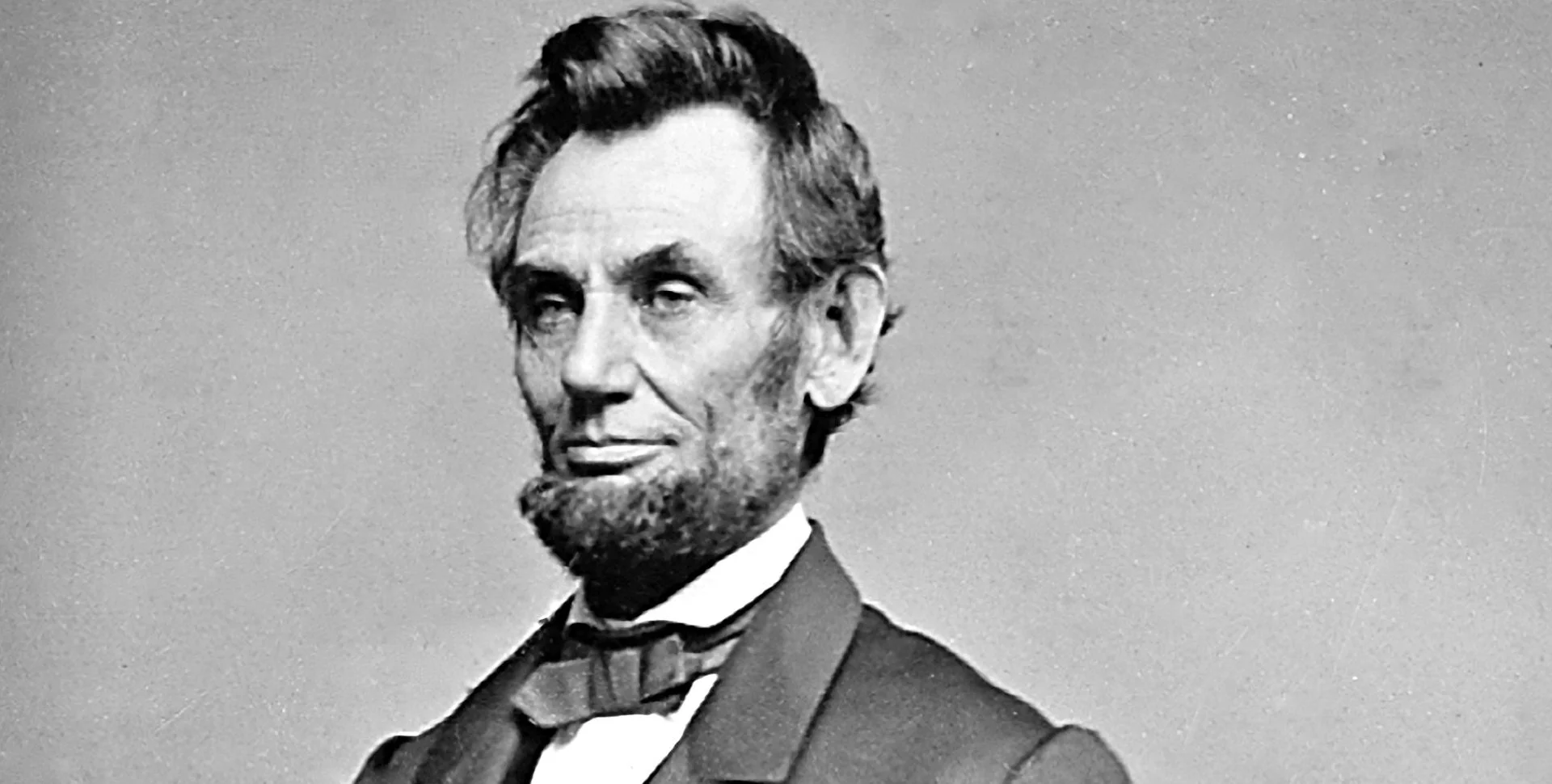
Lincoln on Leadership: A Book Review for School District Leadership
Are you looking for a short read that provides clear and practical examples of effective leadership for personal development? If so, you would benefit from studying Donald T. Phillips’ book, Lincoln on Leadership: Executive Strategies for Tough Times, an analysis of the executive leadership traits embodied by the 16th president of the United States. In his review of President Abraham Lincoln’s example, Phillips takes the perspective of one discovering a rich tapestry of leadership skills hidden in plain sight. His approach makes the reader feel like they are learning about the well-studied leader for the first time.

Abraham Lincoln, United States 16th President
Are you looking for a short read that provides clear and practical examples of effective leadership for personal development? If so, you would benefit from studying Donald T. Phillips’ book, Lincoln on Leadership: Executive Strategies for Tough Times, an analysis of the executive leadership traits embodied by the 16th president of the United States. In his review of President Abraham Lincoln’s example, Phillips takes the perspective of one discovering a rich tapestry of leadership skills hidden in plain sight. His approach makes the reader feel like they are learning about the well-studied leader for the first time.
Phillips researched thousands of primary sources including letters, recorded accounts, and interview transcripts from people who worked directly with the President. He also highlighted several of Lincoln’s letters and quotes throughout the book. The use of the actual words of Lincoln both illuminates and validates Phillips’ claim that he possessed modern leadership traits that are applicable in today’s business and workforce environments. Phillips organized the book into four sections that address effective leaders’ ability to build relationships, personal character traits and values, endeavors to lead, and communication skills.
In the first section, entitled “People”, Phillips outlines a critical strategy that leaders may use to build meaningful relationships with subordinates. Specifically, he describes Lincoln’s example of engaging those around him to empower them, build strong alliances, and cultivate a sense of loyalty. Phillips’ second section, “Character”, highlights how Lincoln’s uncompromising policies of honesty and integrity won over many of the strong personalities he confronted. Phillips encourages today’s leaders to align their actions, values, and character to influence the character of their organizations, as Lincoln influenced the character of his nation. In the third section, “Endeavor”, Phillip teaches leaders to emulate the way that Lincoln encouraged innovation and sought generals who craved responsibility and took risks. He also provides rich, historical examples of the President’s decisiveness to show that a leader has to be decisive, set goals, and be results-oriented. Phillip's final section, “Communication”, puts President Lincoln’s charm and masterful communication style on display to emphasize the power and importance of effective communication for leaders. He points out how mastering the art of public speaking, developing the ability to influence people through conversation, and communicating a strong vision are at the essence of executive leadership.
Potential Impact for School District Leaders/ Reflection and Recommendation
Lincoln on Leadership achieved Donald T. Phillips’ goal of illustrating in clear and concise detail the leadership prowess of President Lincoln. Phillips’ book elucidates the leadership principles that Lincoln demonstrated throughout his life and identified why executive leaders today should implement them. Throughout the book, Phillips frames Lincoln’s leadership traits in a way that aligns to the work of the Superintendent as the chief executive of a school district. Phillips’ work should equip any school leader with solid leadership principles and would serve as a reminder that leaders must embody, communicate, and affirm high values and character. Additionally, Lincoln on Leadership lays out a straightforward blueprint for superintendents to build essential relationships in their school systems and the communities they serve.
Finally, a superintendent would benefit from studying Lincoln on Leadership in great detail to better understand how the 16th president of the United States was able to lead in times of crisis when leaders are needed most. It could be argued that most superintendents would have already cultivated many of the leadership traits presented by Phillips and that it would be more relevant for aspiring leaders or first-time superintendents. However, Lincoln on Leadership can still serve as a refresher for a superintendent and should be read by all educational leaders.
Reference
Phillips, D. T. (1992) Lincoln on Leadership: Executive Strategies for Tough Times. New York: Warner Books. (ISBN 0-446-39459-9)
If you found this post valuable, please consider supporting my work as an independent creator.

Mental Health Mandates: What Parents Need to know about Texas House Bill 18
On Tuesday, May 7, 2019, the Texas Senate Education Committee, chaired by Senator Larry Taylor (R), heard public testimony regarding the student, mental health-related legislation House Bill 18 (HB 18; Price et al.). HB18 requires teachers, counselors, and principals to receive professional development related to student mental health every year. This training is to focus on how mental health conditions, including grief and trauma, affect student learning and behavior and how “evidence-based, grief-informed, and trauma-informed strategies” support the academic success of students.

On Tuesday, May 7, 2019, the Texas Senate Education Committee, chaired by Senator Larry Taylor (R), heard public testimony regarding the student, mental health-related legislation House Bill 18 (HB 18; Price et al.). HB18 requires teachers, counselors, and principals to receive professional development related to student mental health every year. This training is to focus on how mental health conditions, including grief and trauma, affect student learning and behavior and how “evidence-based, grief-informed, and trauma-informed strategies” support the academic success of students.
HB 18 will also require districts to utilize mental health-related educational programs and services and to implement mental health-related curricula. Additionally, mental health TEKS are to be embedded in grades 6-12 health classes. Another feature of HB 18 is that school districts will be required to publish in their student handbooks and on district websites the following:
the policies and procedures adopted to promote the physical and mental health of students;
the physical and mental health resources available at each campus;
contact information for the nearest providers of essential public health services; and
contact information for the nearest local mental health authority.
In light of the latest string of student mass shooting in Texas public schools, HB18 appears to be a bold move for Texas legislature to ensure that educators are better prepared to identify the warning signs of student mental illness and that school districts are equipped with curricula, programs, and services to address the needs of students suffering from mental health and trauma-related issues. It also appears as though Texas legislators want to use HB 18 to destigmatize mental health issues in the communities they serve.
It is not difficult to see how this bill would be received with open arms by most educators, and this was evident by the supportive comments shared during the Senate Education Committee meeting. At first glance, I agreed that the requirements brought forth by HB18, if implemented with fidelity, could impact the growing number of students suffering from mental health and trauma-related problems in Texas public schools in a positive way. However, after reviewing HB 18 in its entirety, I realized that there are a few potential issues with the legislation that could have some unintended, negative consequences for parents, the most salient of which is a potential student and parent backlash. Lines 21-27 on page 23 and lines 1-3 on page 24 of HB 18 indicate that a district employee or employee of a mental health service provider (physician or nonphysician) contracted with the district would have the authority to recommend that a child have a professional evaluation. While the bill does include language that requires written parental or guardian permission before evaluation or treatment actions are taken, it does not address steps the district will take if or when a parent declines the recommended health treatment. The likelihood of a parent refusing recommended mental health treatment for their child may be elevated especially since the recommendations can come from a staff member who is not a mental health professional. Will a parent who denies recommendations be reported to Child Protective Services, found liable in any way, or charged criminally for making an informed choice to refuse mental health treatment? In this case, will the students be excluded from participating in classroom or school activities? Will the student and parents be treated differently by the school or district?
The second issue with HB18 is related to the lack of parental oversight of the mental health programs and practice that their children will be subjected to in their schools. Lines 9-18 on page 27 of the bill state that the Texas Education Agency (TEA), in coordination with the Health and Human Services Commission and regional services centers, will provide to districts a list of best practice-based programs and research-based practices for the implementation of HB 18. However, it does not delineate the criteria that TEA will use for determining which services and programs will be provided to districts. Moreover, since there is no requirement for districts to inform parents of the programs and practices they choose, the door is left open for a wide variety of resources to be legitimized and introduced to students without parental input.
Hopefully, there will be clarifications coming soon to address these potential issues for parents. In the meantime, stay tuned as I highlight other aspects of the proposed legislation in future posts.
If you found this post valuable, please consider supporting my work as an independent creator.