
Looking for Your Next Career Move?
No matter where you are in your career, there comes a time when you wonder if a change is necessary. In this post I share a simply approach to finding your way to a career path that brings you joy and satisfaction.

Me: What do you want to be when you grow up?
My five-year-old daughter: I want to be a doctor, police officer, firefighter, artist, ballet dancer, farmer, the president, and...hmm.
No matter where you are in your career, there comes a time when you wonder if a change is necessary. You may consider changing organizations, seeking a different role, or leaping into a different profession altogether. This condition of wonderment was on full display for me as I recently participated in a panel discussion for a class of educational leadership doctoral students. The course was full of mid-career educators and administrators pursuing a doctorate to open doors in their career. Toward the end of the panel discussion one of the educators posed the question, 'How do you know when to take the next move in your career?'. My response may have surprised a few students, although I don’t believe it was profound. It was merely based on nearly two decades of seeking the same answer for myself.Consequently, I believe that I have finally arrived at a response that guides my career moves and keeps me fulfilled. I think that before we seek a new career opportunity, we should stop trying to “follow our passion” and depending so much on our jobs for fulfillment. It doesn’t matter what career move you make if you seek opportunities to arrive at a “professional nirvana,” you may find yourself looking for new jobs far too often. After all, we don't find our passion, we develop it over time. In fact, we can have more than one passion at the same time, and they can change. Also, not all passions manifest themselves into livable wages. These realities shouldn’t preclude anyone from looking for growth opportunities, but it should frame one’s approach to the question, 'How do you know when to take the next move in your career?'. To this end, the way I believe we should approach the question should be very similar to the way young children respond to the question, 'what do you want to do when you grow up?'. Why children? The truth is, young people, like my five-year-old daughter, are open-minded about their interests, and they are filled with unfiltered, unapologetic, curiosity. Here are three approaches to exploring career change options that I have learned from working with children.
Explore all of your interests
At a young age, children begin to consider what careers intrigue them. Ask any child what they want to do when they grow up, and they will describe or name jobs that seem cool to them at that moment. Even if those careers choices seem divergent, depending on the age of the child, each one appeals to a part of who they are as a person at that moment in time. Interestingly, this highlights how children at some level are in touch with what interests them. Likewise, we as adults should explore what appeals to all of our interests. Just imagine what we may pursue if we are open to all tapping into all aspects of our personal interests. Dig deeper into what interests you and why, and don't hold back. The most important thing is that you don’t automatically shut down something before mining it for all possible jewels of knowledge and skills.
Embrace the power to change your mind
Another key lesson we can pick up from children is to stop acting like you can't change your mind. Children don't seem to understand the word 'no' when it comes to envisioning what they would like to do in life. There is power and beauty in this simplistic view. It is empowering for each of us take on a mindset that allows us to change our mind about what career paths interests. We should avoid limiting ourselves with self-imposed constraints. There are no rules against having multiple areas of interest or changing interests, and we owe it to ourselves to allow our acquired knowledge and skills to continue to mold and shape our attention.
Don’t worry about what others think
We sometimes muffle our career options by being overly concerned with what others consider is successful. Your success is not determined by titles or the approval of others. By now I am confident that we are all aware of this truth, but for some reason, it doesn’t stop us from being weighed down by what other people may or may not be thinking about our career. So we need to get better at tuning out or minimizing the mental pressure we put on ourselves. The reality is that everyone has an opinion, but what matters most is that you can stay true yourself and your family.So, the next time you find yourself in a job not feeling fulfilled and wondering what is next for you to pursue, just remember how children approach the question, 'what do you want to be when you grow up?'. More specifically apply the three lessons from children (1) Acknowledge all of Your Interest; (2) Embrace the Power to Change Your Mind; (3) Don’t Worry about What Others Think. With this approach, you will gain clarity as you choose a career path that brings you joy and satisfaction.
If you found this post valuable, please consider supporting my work as an independent creator.
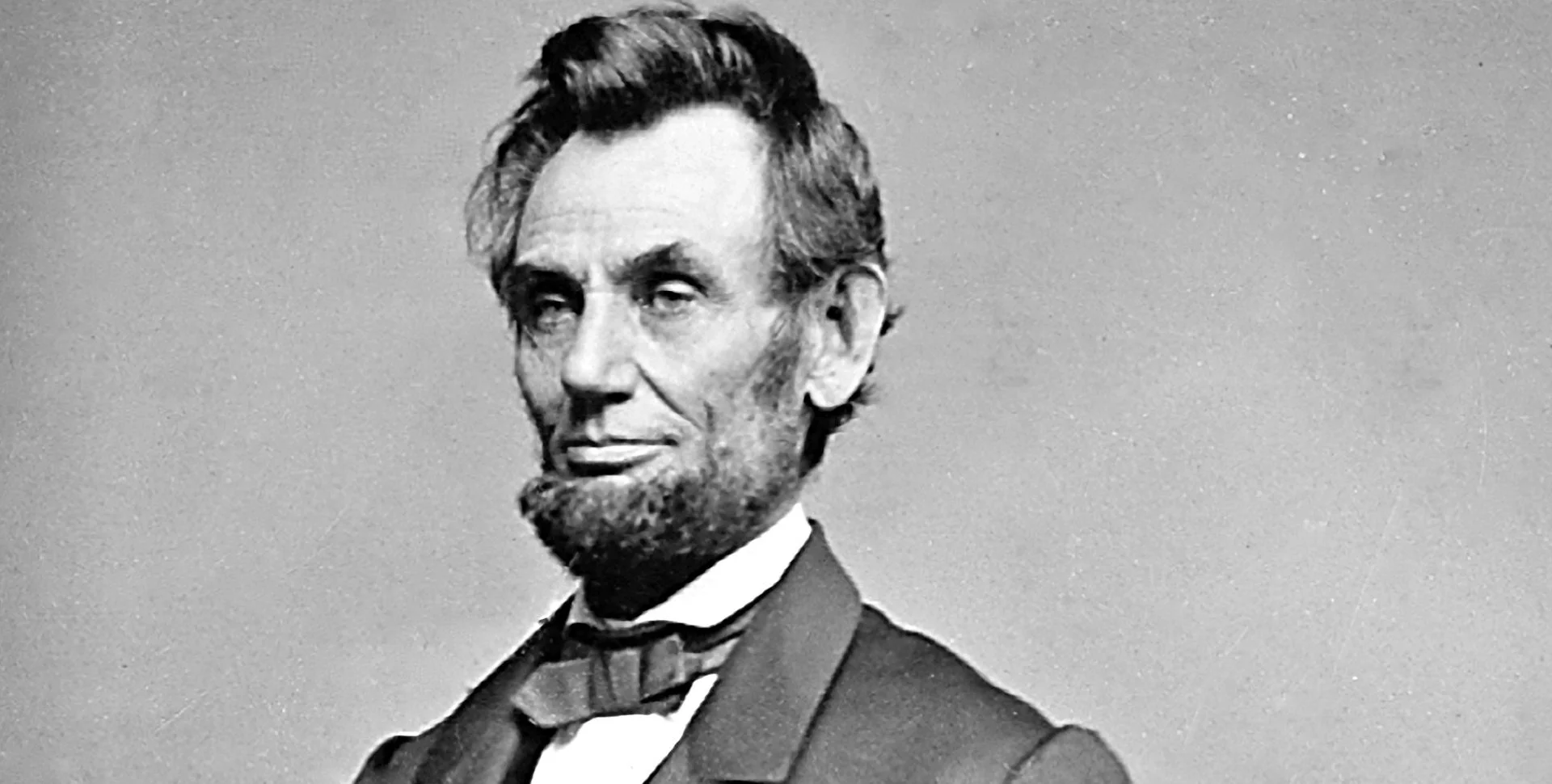
Lincoln on Leadership: A Book Review for School District Leadership
Are you looking for a short read that provides clear and practical examples of effective leadership for personal development? If so, you would benefit from studying Donald T. Phillips’ book, Lincoln on Leadership: Executive Strategies for Tough Times, an analysis of the executive leadership traits embodied by the 16th president of the United States. In his review of President Abraham Lincoln’s example, Phillips takes the perspective of one discovering a rich tapestry of leadership skills hidden in plain sight. His approach makes the reader feel like they are learning about the well-studied leader for the first time.

Abraham Lincoln, United States 16th President
Are you looking for a short read that provides clear and practical examples of effective leadership for personal development? If so, you would benefit from studying Donald T. Phillips’ book, Lincoln on Leadership: Executive Strategies for Tough Times, an analysis of the executive leadership traits embodied by the 16th president of the United States. In his review of President Abraham Lincoln’s example, Phillips takes the perspective of one discovering a rich tapestry of leadership skills hidden in plain sight. His approach makes the reader feel like they are learning about the well-studied leader for the first time.
Phillips researched thousands of primary sources including letters, recorded accounts, and interview transcripts from people who worked directly with the President. He also highlighted several of Lincoln’s letters and quotes throughout the book. The use of the actual words of Lincoln both illuminates and validates Phillips’ claim that he possessed modern leadership traits that are applicable in today’s business and workforce environments. Phillips organized the book into four sections that address effective leaders’ ability to build relationships, personal character traits and values, endeavors to lead, and communication skills.
In the first section, entitled “People”, Phillips outlines a critical strategy that leaders may use to build meaningful relationships with subordinates. Specifically, he describes Lincoln’s example of engaging those around him to empower them, build strong alliances, and cultivate a sense of loyalty. Phillips’ second section, “Character”, highlights how Lincoln’s uncompromising policies of honesty and integrity won over many of the strong personalities he confronted. Phillips encourages today’s leaders to align their actions, values, and character to influence the character of their organizations, as Lincoln influenced the character of his nation. In the third section, “Endeavor”, Phillip teaches leaders to emulate the way that Lincoln encouraged innovation and sought generals who craved responsibility and took risks. He also provides rich, historical examples of the President’s decisiveness to show that a leader has to be decisive, set goals, and be results-oriented. Phillip's final section, “Communication”, puts President Lincoln’s charm and masterful communication style on display to emphasize the power and importance of effective communication for leaders. He points out how mastering the art of public speaking, developing the ability to influence people through conversation, and communicating a strong vision are at the essence of executive leadership.
Potential Impact for School District Leaders/ Reflection and Recommendation
Lincoln on Leadership achieved Donald T. Phillips’ goal of illustrating in clear and concise detail the leadership prowess of President Lincoln. Phillips’ book elucidates the leadership principles that Lincoln demonstrated throughout his life and identified why executive leaders today should implement them. Throughout the book, Phillips frames Lincoln’s leadership traits in a way that aligns to the work of the Superintendent as the chief executive of a school district. Phillips’ work should equip any school leader with solid leadership principles and would serve as a reminder that leaders must embody, communicate, and affirm high values and character. Additionally, Lincoln on Leadership lays out a straightforward blueprint for superintendents to build essential relationships in their school systems and the communities they serve.
Finally, a superintendent would benefit from studying Lincoln on Leadership in great detail to better understand how the 16th president of the United States was able to lead in times of crisis when leaders are needed most. It could be argued that most superintendents would have already cultivated many of the leadership traits presented by Phillips and that it would be more relevant for aspiring leaders or first-time superintendents. However, Lincoln on Leadership can still serve as a refresher for a superintendent and should be read by all educational leaders.
Reference
Phillips, D. T. (1992) Lincoln on Leadership: Executive Strategies for Tough Times. New York: Warner Books. (ISBN 0-446-39459-9)
If you found this post valuable, please consider supporting my work as an independent creator.

The Individual in Education
It is hard to imagine a segment of our American society in 2019 that has not been impacted by the dysfunction of our current political and social structure. Nevertheless, our inability to find unifying solutions to matters that we agree upon is an indicator of a much deeper problem that we have not begun to understand. Sadly, these issues are magnified in the public education system in America. I am sure we have all heard the adage derived from the writings of Thomas Reid, a chain is only as strong as its weakest link. Unfortunately, today the strength of character of the individual educator is the "weakest link" and is often overshadowed by the debate over the effectiveness of the United State's public education system.

"Everyone thinks of changing the world, but no one thinks of changing himself." Leo Tolstoy
It is hard to imagine a segment of our American society in 2019 that has not been impacted by the dysfunction of our current political and social structure. Nevertheless, our inability to find unifying solutions to matters that we agree upon is an indicator of a much deeper problem that we have not begun to understand. Sadly, these issues are magnified in the public education system in America. I am sure we have all heard the adage derived from the writings of Thomas Reid, a chain is only as strong as its weakest link. Unfortunately, today the strength of character of the individual educator is the "weakest link" and is often overshadowed by the debate over the effectiveness of the United State's public education system.
Collectively, we are channeling billions of dollars into innovative programs to close the growing achievement gaps between students from diverse racial and economic backgrounds, which only result in pockets of change and overall no lasting effects. We publicly claim a focus on student learning and the quality of public education, yet we are growing in our over-reliance on standardized tests and other evaluation systems that don't accurately capture the state of student learning. We have teacher shortages across the country coupled with struggles in the recruitment and retention of effective teachers. Moreover, increasing numbers of currently employed teachers are crossing the line with students and exercising poor judgment by engaging in inappropriate relationships with students. At the same time, more students are committing suicide and carrying out mass shooting in schools while politicians and the media argue over gun control and mental health support. These problems interfere with optimal academic performance and degrade the strength and vitality of our society. So, how can we begin to solve the issues that plague our public education system?
For starters, we should be asking ourselves individually; How have I contributed to these problems? Before you stop reading let me be clear, I know that no one wants to have the finger of blame pointed at them. As I stated earlier, there are tons of people sincerely working to address these problems on a political, financial, even spiritual level, so there is enough blame to go around. What I am claiming is that we all have a responsibility to examine who we are and the content of our character. Before we can look at how public education can improve student achievement at the classroom, campus, or school system level, we have to hold ourselves accountable to a higher standard of character and own up to the fact that when we don't, it negatively impacts our students and the communities we serve. Just look at your average elementary teacher. She has the responsibility to make hundreds even thousands of decisions every day that will, in the long-term, impact the lives of hundreds of students. As such, we can't lose sight of how her character, in addition to her professional knowledge and skill, will help her accurately diagnose students' instructional needs and adequately utilize the resources and strategies available. Principals have the added responsibility as the instructional leader, to ensure that teachers have the resources, professional learning experiences, and collective vision for all staff to do their best work. With these weighty charges on the shoulders of a collective few, it is imperative that each educator has the highest moral character and is more cognizant of how their values and integrity impact the broader system.
To this end, the more that teachers and teacher leaders enlist the courage to address their responsibilities and personal character, the more likely it is that more campuses and school systems will be able to take a different approach to mitigate the problems public education faces today. The individual in education makes all of the difference in the world!