Lincoln on Leadership: A Book Review for School District Leadership
Are you looking for a short read that provides clear and practical examples of effective leadership for personal development? If so, you would benefit from studying Donald T. Phillips’ book, Lincoln on Leadership: Executive Strategies for Tough Times, an analysis of the executive leadership traits embodied by the 16th president of the United States. In his review of President Abraham Lincoln’s example, Phillips takes the perspective of one discovering a rich tapestry of leadership skills hidden in plain sight. His approach makes the reader feel like they are learning about the well-studied leader for the first time.

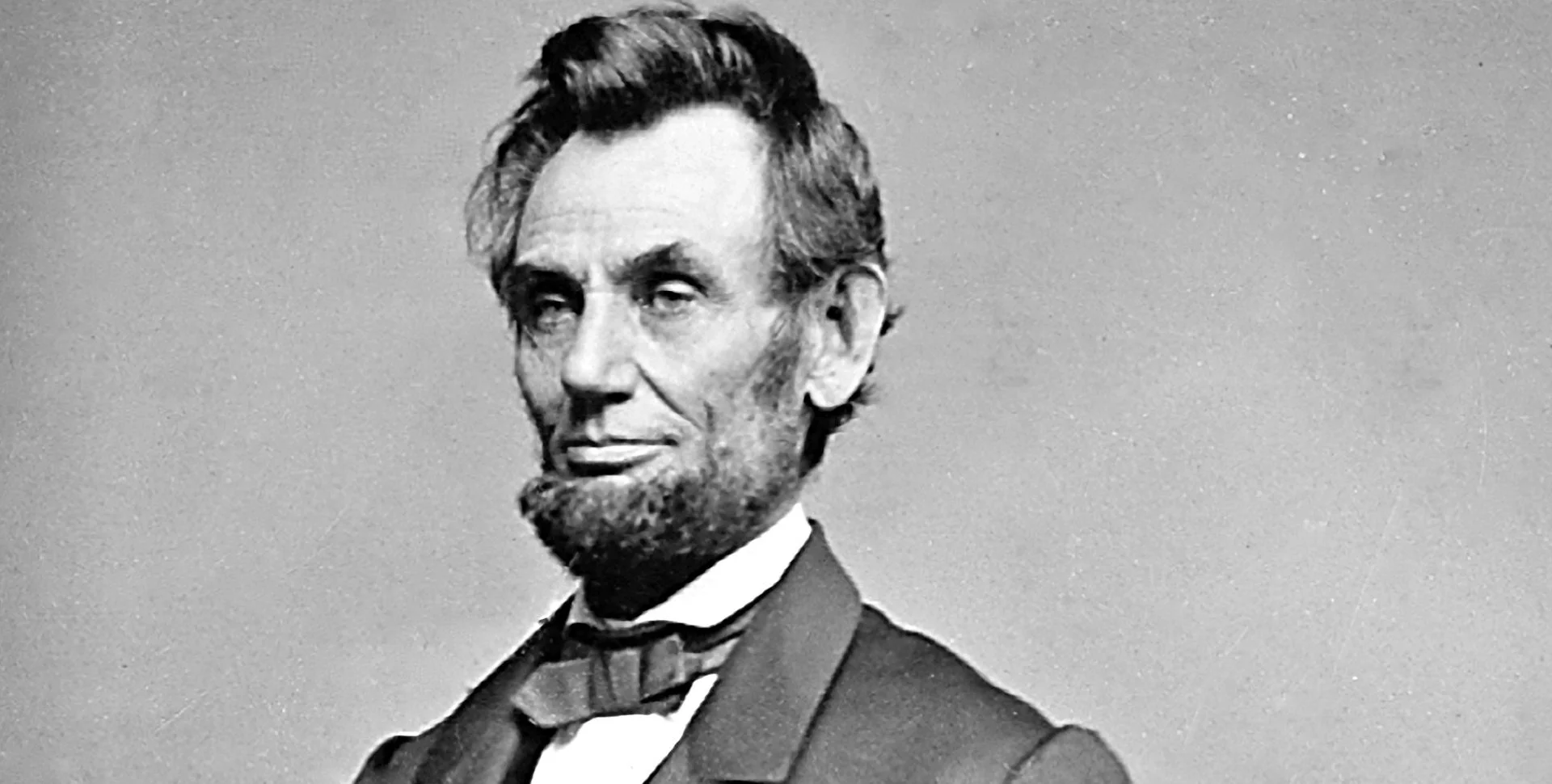
Abraham Lincoln, United States 16th President
Are you looking for a short read that provides clear and practical examples of effective leadership for personal development? If so, you would benefit from studying Donald T. Phillips’ book, Lincoln on Leadership: Executive Strategies for Tough Times, an analysis of the executive leadership traits embodied by the 16th president of the United States. In his review of President Abraham Lincoln’s example, Phillips takes the perspective of one discovering a rich tapestry of leadership skills hidden in plain sight. His approach makes the reader feel like they are learning about the well-studied leader for the first time.
Phillips researched thousands of primary sources including letters, recorded accounts, and interview transcripts from people who worked directly with the President. He also highlighted several of Lincoln’s letters and quotes throughout the book. The use of the actual words of Lincoln both illuminates and validates Phillips’ claim that he possessed modern leadership traits that are applicable in today’s business and workforce environments. Phillips organized the book into four sections that address effective leaders’ ability to build relationships, personal character traits and values, endeavors to lead, and communication skills.
In the first section, entitled “People”, Phillips outlines a critical strategy that leaders may use to build meaningful relationships with subordinates. Specifically, he describes Lincoln’s example of engaging those around him to empower them, build strong alliances, and cultivate a sense of loyalty. Phillips’ second section, “Character”, highlights how Lincoln’s uncompromising policies of honesty and integrity won over many of the strong personalities he confronted. Phillips encourages today’s leaders to align their actions, values, and character to influence the character of their organizations, as Lincoln influenced the character of his nation. In the third section, “Endeavor”, Phillip teaches leaders to emulate the way that Lincoln encouraged innovation and sought generals who craved responsibility and took risks. He also provides rich, historical examples of the President’s decisiveness to show that a leader has to be decisive, set goals, and be results-oriented. Phillip's final section, “Communication”, puts President Lincoln’s charm and masterful communication style on display to emphasize the power and importance of effective communication for leaders. He points out how mastering the art of public speaking, developing the ability to influence people through conversation, and communicating a strong vision are at the essence of executive leadership.
Potential Impact for School District Leaders/ Reflection and Recommendation
Lincoln on Leadership achieved Donald T. Phillips’ goal of illustrating in clear and concise detail the leadership prowess of President Lincoln. Phillips’ book elucidates the leadership principles that Lincoln demonstrated throughout his life and identified why executive leaders today should implement them. Throughout the book, Phillips frames Lincoln’s leadership traits in a way that aligns to the work of the Superintendent as the chief executive of a school district. Phillips’ work should equip any school leader with solid leadership principles and would serve as a reminder that leaders must embody, communicate, and affirm high values and character. Additionally, Lincoln on Leadership lays out a straightforward blueprint for superintendents to build essential relationships in their school systems and the communities they serve.
Finally, a superintendent would benefit from studying Lincoln on Leadership in great detail to better understand how the 16th president of the United States was able to lead in times of crisis when leaders are needed most. It could be argued that most superintendents would have already cultivated many of the leadership traits presented by Phillips and that it would be more relevant for aspiring leaders or first-time superintendents. However, Lincoln on Leadership can still serve as a refresher for a superintendent and should be read by all educational leaders.
Reference
Phillips, D. T. (1992) Lincoln on Leadership: Executive Strategies for Tough Times. New York: Warner Books. (ISBN 0-446-39459-9)
If you found this post valuable, please consider supporting my work as an independent creator.

What is Your Personal Example Saying?
Most days I wake up with my daily routine on my mind. I anticipate my workout and the associated feelings of accomplishment after I complete the sweat session. Ever mindful of the time, I continuously monitor the clock to make sure I have ample time for prayer, Bible study, and writing. Then it is a mad dash to hit the shower, get dressed, and kiss my family goodbye before dashing out of the door only to be joined in traffic by thousands of other individuals rushing to work. As I engage in all of these routine tasks, I am intentionally focused on doing, what I have come to learn, helps me to be the best person I can be for the day. But today, when I arrived at work, I realized that there was an important factor missing from my daily regiment.

Most days I wake up with my daily routine on my mind. I anticipate my workout and the associated feelings of accomplishment after I complete the sweat session. Ever mindful of the time, I continuously monitor the clock to make sure I have ample time for prayer, Bible study, and writing. Then it is a mad dash to hit the shower, get dressed, and kiss my family goodbye before dashing out of the door only to be joined in traffic by thousands of other individuals rushing to work. As I engage in all of these routine tasks, I am intentionally focused on doing, what I have come to learn, helps me to be the best person I can be for the day. But today, when I arrived at work, I realized that there was an important factor missing from my daily regiment.
It was when I stumbled upon an encounter with a co-worker that I rarely interact with in the break room. After a few pleasantries and a short conversation about a recent news event, my co-worker surprised me with one of those comments that make you think, "I never knew you saw me that way." He shared a comment that included a statement like, "because of you, I have decided to pursue a long-held professional goal...". I immediately replied, "good for you," but internally I was shocked by his response because I couldn't recall ever having a conversation with him about his career goals, my professional experiences, or anything that would lead me to believe I would have influenced his decision. I was quickly reminded at that moment that my personal example is speaking to people even to those that I don't really engage in conversation.
Personally, I believe that we all should take responsibility for our words and actions, which are manifested through our personal example. So, after being reminded of my long-held belief by my co-worker, I realized that I was apparently communicating a message that encouraged others to take action to improve themselves. However, that encounter made me think a little more about the message I share daily. More specifically, I wondered, what am I doing to ensure that my personal example is communicating what I would like for it to say? After all, I put so much effort into getting ready, physically, spiritually, and emotionally to be the best version of myself, that I should be more aware of the fact that my actions are speaking to others.Now, as an educator, you can't avoid influencing others through your example. In fact, one of the things successful teachers realize is that your personal example is your most potent instructional tool with students. Since this concept wasn't foreign to me, I focused on identifying approaches to help me be more present and aware of the opportunities I have to influence and hone the message of my personal example.
(1) strive to be the best version of myself in every aspect of my life, from my appearance to my word choice to my disposition every day
Excellence fosters excellence, and the more we are at our best, the more we can inspire others to be at their best. Making a conscious effort to model the highest standard of professionalism, collegiality, and respect for everyone we interact with will drastically streamline what our personal example is saying to others.
(2) concentrate on being present and paying more attention to the people I interact with daily
We have to be aware to be intentional, and it is easier to pay attention to people when your general disposition is to have outgoing concern for others. Living as an example is an enlightening way of life rooted in service to others. It can be both rewarding and eye-opening to merely think about the needs, perspectives, and strengths of others before acting.In a Forbes article, The Most Powerful Leadership Tool You Have: Your Own Example, contributor John Hall states, "Your own example is the most powerful leadership tool you have." He goes on to share five things you can do to strengthen that tool and improve your example as a leader.
1. Get in the trenches (without getting trapped in the weeds).2. Eliminate superiority barriers.3. Forget your insecurities.4. Challenge yourself and those around you to become better.5. Prove the impossible is possible.
My daily routines are filled with activities designed to help me accomplish my goals. They serve me well, and I see no reason to change them. Instead, I understand the need to align them to the broader purpose of preparing me to influence and improve the lives of others positively. After all, Booker T. Washington said it best, "If you want to lift yourself up, lift up someone else." So the more awareness I have of the message of my personal example, the more I will be able to accomplish my goals of helping others aim higher and be better. Now, my question to you is, what does your personal example communicate?