What will Texas Public Schools Look like in the Fall?
According to the Texas Education Agency (TEA), Texas public schools will have different options to begin bringing students back to classrooms in the fall. However, there are many things to consider before that happens, and every educator has a role to play. What are you doing to to prepare for schools to open in the Fall?
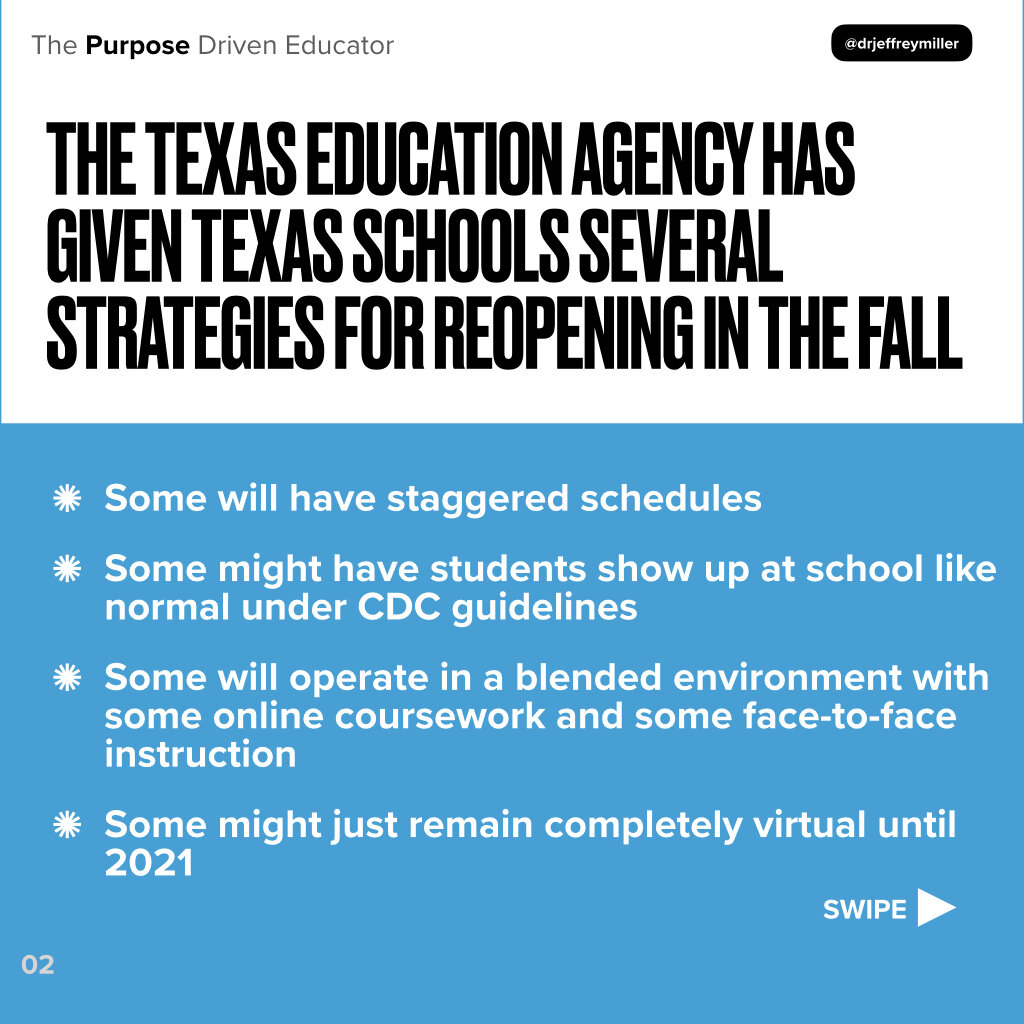
Some will have staggered schedules
Some might have students show up at school like normal while others continue their coursework online
Some might just remain completely virtual until 2021
With so many unknowns and continuously changing data, Texas school superintendents are starting to game out how public education will look in the fall for their student. What will be the impact of inconsistent plans for Texas Schools to reopen in the Fall?
Inconsistent food service for students
Inequities in computers and student learning resources
Inconsistent instruction and learning experiences
Expanding learning gaps
Problematics home situations for some students
Teacher shortages
Recent state guidance has encouraged many Texas school districts to prioritize in-person summer school for the at-risk students with the greatest academic needs. So what should Texas school district do to avoid the problems in the fall?
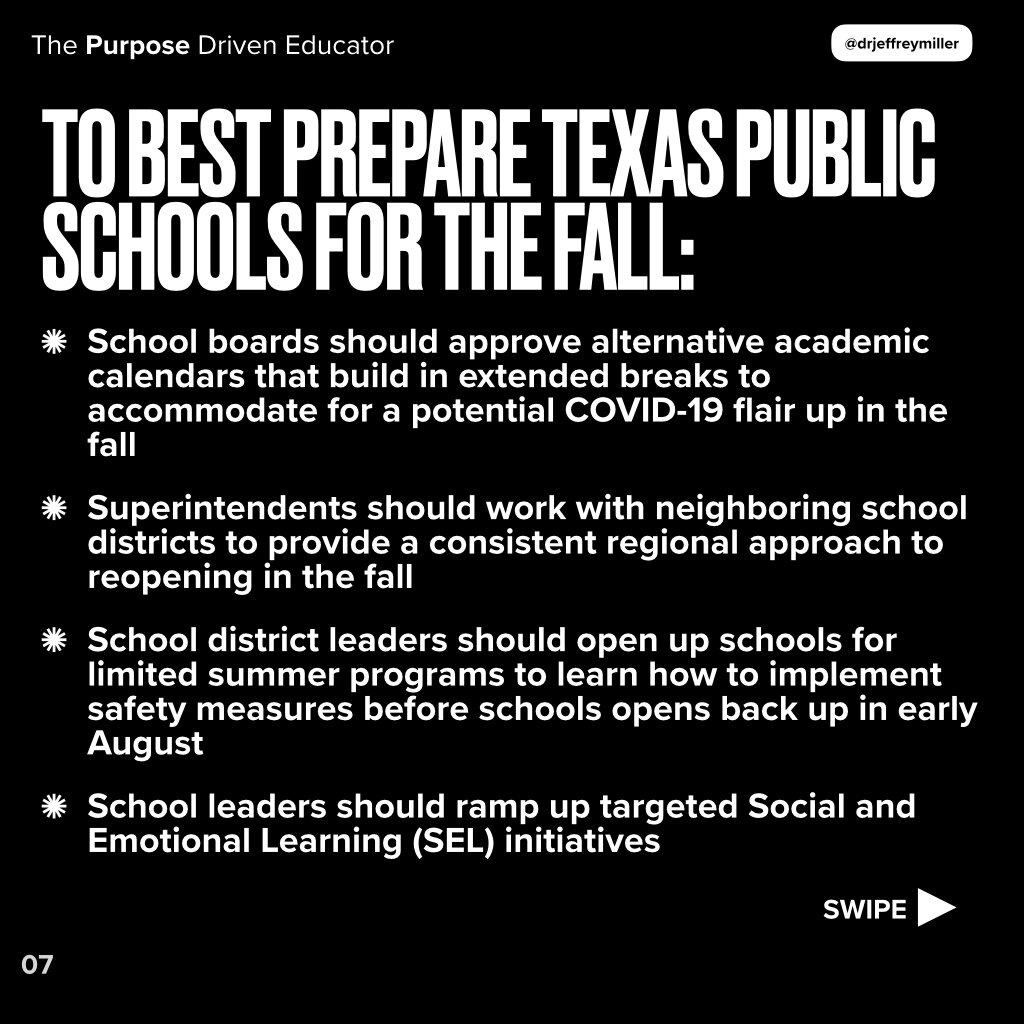
Open up schools for limited summer programs to learn how to implement safety measures before schools opens back up in early August
Work with neighboring school districts to provide a consistent regional approach to reopening in the fall
School boards should approve alternative academic calendars that build in extended breaks to accommodate for a potential COVID-19 flair up in the fall
Ramp up targeted Social and Emotional Learning (SEL) initiatives
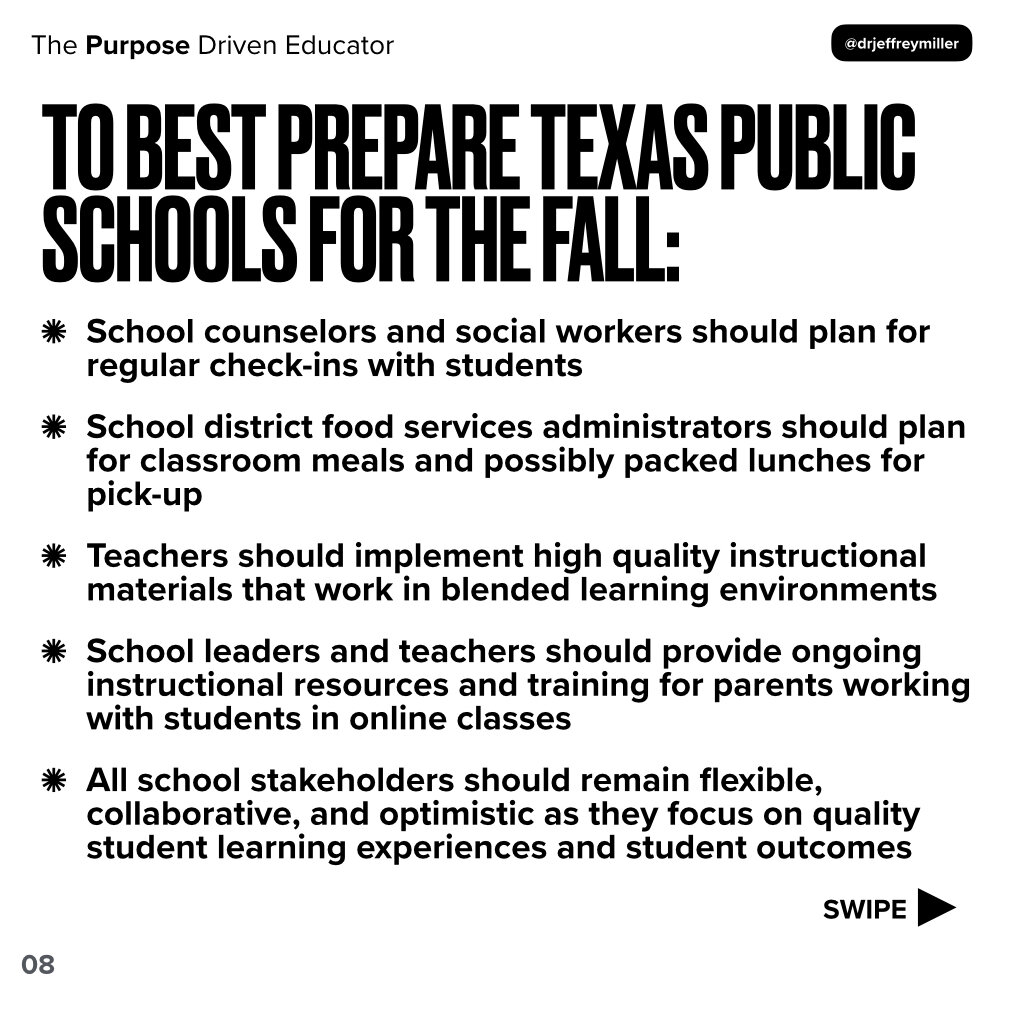
Implement high quality instructional material that work in blended learning environments
Focus on instructional resources and training for parents working with students in online classes
We will have school in the Fall, but the questions remain how and with what effectiveness. Texas can’t afford to waste any time this summer to prepare for the fall. What are you doing to to prepare for schools to open in the Fall?
Leave a comment about what else we should consider.




If you found this post valuable, please consider supporting my work as an independent creator.

Mental Health Mandates: What Parents Need to know about Texas House Bill 18
On Tuesday, May 7, 2019, the Texas Senate Education Committee, chaired by Senator Larry Taylor (R), heard public testimony regarding the student, mental health-related legislation House Bill 18 (HB 18; Price et al.). HB18 requires teachers, counselors, and principals to receive professional development related to student mental health every year. This training is to focus on how mental health conditions, including grief and trauma, affect student learning and behavior and how “evidence-based, grief-informed, and trauma-informed strategies” support the academic success of students.

On Tuesday, May 7, 2019, the Texas Senate Education Committee, chaired by Senator Larry Taylor (R), heard public testimony regarding the student, mental health-related legislation House Bill 18 (HB 18; Price et al.). HB18 requires teachers, counselors, and principals to receive professional development related to student mental health every year. This training is to focus on how mental health conditions, including grief and trauma, affect student learning and behavior and how “evidence-based, grief-informed, and trauma-informed strategies” support the academic success of students.
HB 18 will also require districts to utilize mental health-related educational programs and services and to implement mental health-related curricula. Additionally, mental health TEKS are to be embedded in grades 6-12 health classes. Another feature of HB 18 is that school districts will be required to publish in their student handbooks and on district websites the following:
the policies and procedures adopted to promote the physical and mental health of students;
the physical and mental health resources available at each campus;
contact information for the nearest providers of essential public health services; and
contact information for the nearest local mental health authority.
In light of the latest string of student mass shooting in Texas public schools, HB18 appears to be a bold move for Texas legislature to ensure that educators are better prepared to identify the warning signs of student mental illness and that school districts are equipped with curricula, programs, and services to address the needs of students suffering from mental health and trauma-related issues. It also appears as though Texas legislators want to use HB 18 to destigmatize mental health issues in the communities they serve.
It is not difficult to see how this bill would be received with open arms by most educators, and this was evident by the supportive comments shared during the Senate Education Committee meeting. At first glance, I agreed that the requirements brought forth by HB18, if implemented with fidelity, could impact the growing number of students suffering from mental health and trauma-related problems in Texas public schools in a positive way. However, after reviewing HB 18 in its entirety, I realized that there are a few potential issues with the legislation that could have some unintended, negative consequences for parents, the most salient of which is a potential student and parent backlash. Lines 21-27 on page 23 and lines 1-3 on page 24 of HB 18 indicate that a district employee or employee of a mental health service provider (physician or nonphysician) contracted with the district would have the authority to recommend that a child have a professional evaluation. While the bill does include language that requires written parental or guardian permission before evaluation or treatment actions are taken, it does not address steps the district will take if or when a parent declines the recommended health treatment. The likelihood of a parent refusing recommended mental health treatment for their child may be elevated especially since the recommendations can come from a staff member who is not a mental health professional. Will a parent who denies recommendations be reported to Child Protective Services, found liable in any way, or charged criminally for making an informed choice to refuse mental health treatment? In this case, will the students be excluded from participating in classroom or school activities? Will the student and parents be treated differently by the school or district?
The second issue with HB18 is related to the lack of parental oversight of the mental health programs and practice that their children will be subjected to in their schools. Lines 9-18 on page 27 of the bill state that the Texas Education Agency (TEA), in coordination with the Health and Human Services Commission and regional services centers, will provide to districts a list of best practice-based programs and research-based practices for the implementation of HB 18. However, it does not delineate the criteria that TEA will use for determining which services and programs will be provided to districts. Moreover, since there is no requirement for districts to inform parents of the programs and practices they choose, the door is left open for a wide variety of resources to be legitimized and introduced to students without parental input.
Hopefully, there will be clarifications coming soon to address these potential issues for parents. In the meantime, stay tuned as I highlight other aspects of the proposed legislation in future posts.
If you found this post valuable, please consider supporting my work as an independent creator.
More STAAR Tests, Less Teaching & Learning
oday, May 6, 2019, the Texas legislators are slated to vote on a version of the school finance legislation, House Bill 3, that includes a proposal to add four more writing tests and tie school funding directly to third-grade STAAR results. The new exams would bring the total number of annual assessments to 21 and would mark the second change to the number of tests since 2012. Currently, the State of Texas Assessments of Academic Readiness (STAAR) includes the following assessments:

Today, May 6, 2019, the Texas legislators are slated to vote on a version of the school finance legislation, House Bill 3, that includes a proposal to add four more writing tests and tie school funding directly to third-grade STAAR results. The new exams would bring the total number of annual assessments to 21 and would mark the second change to the number of tests since 2012. Currently, the State of Texas Assessments of Academic Readiness (STAAR) includes the following assessments:
Reading and Mathematics, grades 3–8;
Writing at grades 4 and 7;
Science at grades 5 and 8;
Social Studies at grade 8;
End-of-Course (EOC) assessments for English I, English II, Algebra I, Biology and U.S History; and
Optional End-of-Course (EOC) assessments for English III and Algebra II.
According to a Texas Monthly article published this weekend, the last-minute tinkering of the recently proposed and significant school finance House Bill 3 to include more STAAR exams and link funding to third-grade STAAR results, by the Senate Education Committee comes at a time when many critics are questioning the accuracy and efficacy of the STAAR exams. Many proponents point to the need to increase the numbers assessments in order to determine student academic progress better. Moreover, the focus on 3rd-grade assessment levels connects to the significant body of research that links 3rd-grade reading levels to future student success outcomes. Finally, proponents want to add more writing exams, in particular, because, under the current system, students only have four writing exams (4th grade, 7th grade, English I, and English II).
On the other hand, opponents argue that the Texas Education Agency should improve the accuracy of the STAAR exams before introducing additional assessments. After all, it is challenging to measure student progress if the instrument is inaccurate. Opponents also question the Senate Education Committee’s tying funding to 3rd-grade STAAR results, which merely exacerbates educators’ growing cynicism about legislators’ support of public education.
Absent in the arguments of both sides of the debate is the consideration of the real cost of adding more high-stakes tests. Regardless of the timing that additional assessments are implemented, measures such as these will not improve student achievement. Not only will district administrators, principals, and teachers focus an inordinate amount of their attention on increasing student scores on the new tests, but issues with the accuracy of STAAR academic program and strategies to improve the quality of classroom instruction still will not be resolved or even addressed. Ironically, adding more STAAR tests, whether now or later, will result in a “miss” with regard to the ideal goal of increasing student learning. Today's debate will be yet another distraction from the real and pressing need to improve teaching and learning in Texas public schools.
yhj