Digital Literacy: The Non-Negotiable for College and Career Readiness

What does it really mean to prepare students for the future? Is it enough to put a Chromebook in every student’s hand and install the latest learning app? Or are we fooling ourselves into thinking “access” is the same as “readiness”?
Let’s be honest, many K–12 school systems have poured millions into technology integration, such as Smartboards, Tablets, and Learning Management systems. But here’s the uncomfortable truth: buying shiny devices is not the same thing as teaching digital literacy. In education, digital literacy is students’ and educators’ ability to use digital tools and information in ways that directly support learning, critical thinking, and responsible participation in school and society. It also prepares learners to navigate complex information environments, participate as informed digital citizens, and meet employers’ expectations for technology-enabled work.
If students don’t know which tools to use, when to use them, and why they matter, then all we’ve done is create a very expensive distraction. Now we have artificial intelligence. Teachers are scrambling to figure out what to do with ChatGPT and other AI tools, while students are already using them, sometimes wisely, often recklessly. AI is exposing the gap between access to technology and true digital literacy in real time. Do we really want students to outsource their thinking to machines without ever learning to question, evaluate, and apply the output? Do we assume students understand right from wrong when it comes to technology use? Or will we finally seize this moment to teach them the greater skills of discernment, adaptability, and responsible use of technology to help them navigate an AI-dominant world effectively?
The real challenge isn’t just giving kids technology, it’s teaching them how to learn in a digital environment. Technology is changing faster than we ever imagined, with updates completely transforming how we use it in weeks or months, not years. What won’t change is the need for students to adapt quickly, think critically, and apply tools wisely. That’s the essence of digital literacy. Without it, students won’t be college and career-ready—they’ll be left behind.
David Conley’s landmark EPIC report, Redefining College Readiness, laid this out back in 2007. He identified four critical dimensions for success:
Cognitive strategies
Content knowledge
Self-management
Knowledge about postsecondary education
Notice anything? Each of these dimensions is directly affected by digital literacy. Students who are digitally literate can deepen their content knowledge through authentic, tech-enhanced learning experiences. They can manage their time, tasks, and goals more effectively or use the right tools to compensate when they can’t. They can explore colleges, programs, and career pathways online, equipping themselves to make smarter academic decisions. And yet, here we are in 2025, still trying to figure out how to teach digital literacy. Let me be clear, digital literacy is more critical today than ever before. It is the backbone of college and career readiness. Without it, we are sending students into the world unprepared, expecting them to swim in waters we’ve never taught them to navigate. The question isn’t whether we should embed digital literacy across every layer of K–12 education. The question is, what are we waiting for?
If we want our students to thrive in the real world, and not just survive, it’s time to move past token technology integration and commit to teaching digital literacy as a core skill, not a side lesson. AI is already rewriting the rules of work and learning. If schools don’t catch up, they risk becoming irrelevant, and worse, leaving their students defenseless in a world they don’t fully understand. Anything less is educational malpractice.
If you found this post valuable, please consider supporting my work as an independent creator.
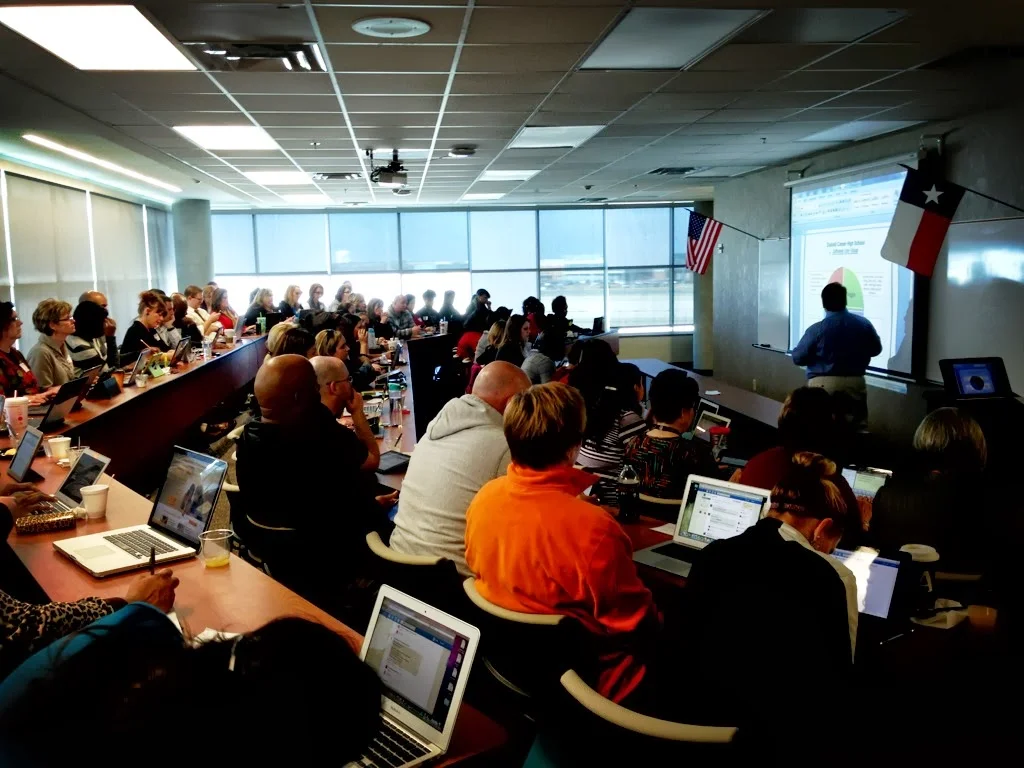
What is your 21st Century Professional Development Plan?
The increasingly competitive global workforce of the 21st century has brought on the need for students and teachers to develop new skills and competencies in our educational systems. Given that the 21st-century classroom is characterized by innovation and project-based context, schools should adopt a 21st-century teaching and learning methods that blend creative thinking skills and employs methods of instruction that integrate modern learning technologies and real-world contexts (Wan & Gut, 2011).

Teacher PD
The increasingly competitive global workforce of the 21st century has brought on the need for students and teachers to develop new skills and competencies in our educational systems. Given that the 21st-century classroom is characterized by innovation and project-based context, schools should adopt a 21st-century teaching and learning methods that blend creative thinking skills and employs methods of instruction that integrate modern learning technologies and real-world contexts (Wan & Gut, 2011). To this end, educators need to be prepared to serve students in the context of new expectations to meet the demands for a more skilled workforce. Accordingly, professional development training for teachers should incorporate innovative curriculum that includes modern technology skills, and practical experiences in a 21st-century classroom environment. This suggests that teachers should also learn about innovative curricula that incorporate critical thinking, complex problem solving, creativity and entrepreneurial thinking, communication and collaboration, innovative use of knowledge, and financial literacy.
How are you personally preparing to address your student’s need to develop 21st-century skills? What is your district’s plan to address these increasing demand for change? At this point, every school system should have educators and administrators actively participating in on-going professional development that focuses on building the capacity of district-level leadership teams, principals, and teacher leaders in understanding 21st-century skills and their importance. According to Wan & Gut (2011), every aspect of our education system including professional development must be aligned to prepare students with the 21st-century skills. Not only should this professional development instruct educators on the 21st-century skills, it should also incorporate modern ideas around technology, innovative pedagogies, and new understandings of the nature of 21st-century students. More specifically, the professional development activities should challenge new and veteran teachers to work within more significant teaching teams and more collaborative professional learning practices (Campbell, Saltmarsh, Chapman, Drew 2013).

ubiquitous technology
Teachers of 21st-century students are increasingly experiencing classrooms where the availability and use of technology by students is ubiquitous. Educational researchers assert,
… it can be argued that there is a need within education for the greater incorporation of technology, a reinvention of the way that classrooms and schools are constructed (at both the physical and relational levels) that respond to the necessary 21st-century skills. The changing nature of technology (moving from static tools for information delivery to dynamic, user developed tools of co-creation and sharing) provides a hint as to what these 21st-century skills may be (Campbell, et.al, 2013, pg. 211).
Along with the integration of technology, 21st-century classrooms are deeply rooted in innovation and problems solving (Chesbro & Boxler 2010). This change in the learning environment for teachers and students creates a need for schools to become responsive and implement new pedagogies to that go beyond the traditional classroom pedagogy (Campbell, et.al, 2013). This is also supported by Wan & Gut (2011),
“For in-service teachers, “just-in-time” preparation that includes coaching and identification of new pedagogical tools and approaches to weave 21st century skills into content areas should be made available. Ideally, teaching academies, or other special initiatives, should exist so teachers can develop and renew 21st century skills and pedagogy in structured programs” (Wan & Gut, 2011, pg. 167).
It is difficult for teachers to teach what they have not experienced or do not know. To this end, the professional development for veteran teachers should intentionally be crafted to ensure the development 21st-century skills in collaborative non-traditional environments to help them understand the needs of the 21st center learner (Wan & Gut, 2011). The closer the professional development environments are to the student learning environments, the more the sharing of practices will lead to the enhancement of student learning (Campbell, et.al, 2013).To summarize, the on-going professional development for veteran teachers should include activities that incorporate innovative uses of technology, pedagogy training that is designed for the 21st-century classroom, and opportunities for teachers to work in collaborative teams of teachers to foster the teacher development of 21st-century skills and competencies.
References
Campbell, M., Saltmarsh, S., Chapman, A., & Drew, C. (2013). Issues of teacher professional learning within ‘non-traditional’ classroom environments. Improving Schools, 16(3), 209-222.
Chesbro, P., & Boxler, N. (2010). WEAVING THE FABRIC of professional development in the 21st century through technology. Journal of Staff Development, 31(1), 48-53,70. Retrieved from http://lib-ezproxy.tamu.edu:2048/login?url=http://search.proquest.com/docview/870739723?accountid=7082
Wan, G. & Gut, D.M. (2011 ) Explorations of Educational Purpose, Bringing Schools into the 21st Century [iBooks Edition]. Retrieved from iTunes.