
Considering Family to Prepare Students for their Future
It seemed like yesterday when educators were introduced to the concept of "21st Century Skills" during professional development sessions and conferences. The message was clear, teachers need to teach differently to prepare students for the industries of the future. Now, it is not uncommon for educators to see the need to prepare students to contribute and shape the society they will inherit. But, starting with the early 2000s, teachers were fed a heavy diet of the frequently updated futuristic 'Did You Know' videos.

Remember when “21st Century Skills” was the buzzword plastered across every professional development session? Teachers were told we had to prepare kids for jobs that didn’t even exist yet, for industries so futuristic they might as well have been ripped from a sci-fi novel. The message was clear: teach differently or risk leaving students unprepared for the brave new world ahead.
And we bought in. Many of us were mesmerized by those “Did You Know” videos—glossy, fast-cut reels showing how technology would reshape life as we knew it. We imagined our students stepping into careers filled with wonder, solving humanity’s greatest challenges with cutting-edge innovations.
But here we are, a decade later, watching universities launch degree programs in—wait for it—the cannabis industry. Northern Michigan University now offers cannabis studies. Cannabis! Is this what all that futuristic hype was for? Is this the grand payoff of years spent reinventing classrooms, revamping standards, and retraining teachers?
Let’s be honest. This isn’t just about marijuana. This is about whether education has lost sight of its true North Star: the family. Have we become so enamored with “innovation” that we’ve stopped asking the most basic question: Will this strengthen families—or weaken them?
Because families, not industries, are the bedrock of society. Strong families create strong communities. And when families crumble? Communities crumble. Nations crumble. That’s not ideology—it’s reality.
Just look around. Addiction isn’t just a crisis; it’s practically a cultural identity. We toss around words like smartphone addiction, porn addiction, food addiction, opioid addiction. Some days it feels like Americans are addicted to being addicted. Even our politics runs on addiction—to outrage, to emotion, to attacking anyone who dares to disagree.
Where does self-control—the antidote to addiction—come from? Families. Where do children first learn resilience, restraint, responsibility? Families. Yet our education system, in its blind pursuit of “the next big thing,” often undermines the very institution that teaches those foundational skills.
So yes, whether or not you support cannabis legalization is beside the point. The real question is: when universities embrace controversial industries, do they consider the ripple effects on the family? Do K-12 schools stop to ask how their policies, practices, and trendy new programs affect the home lives of the students they claim to serve? Or are families just an afterthought in the race to be relevant?
Education should be more than a conveyor belt to industry. It should be a partnership with families to raise healthy, grounded citizens who can think clearly, choose wisely, and lead responsibly. Otherwise, we’re just fueling cycles of indulgence and addiction while patting ourselves on the back for being “innovative.”
So, let’s ask the question few seem brave enough to ask: what will the next decade’s “Did You Know” videos glorify? More industries that exploit our weaknesses? Or educational choices that finally honor and strengthen the institution most critical to our collective future—the family?
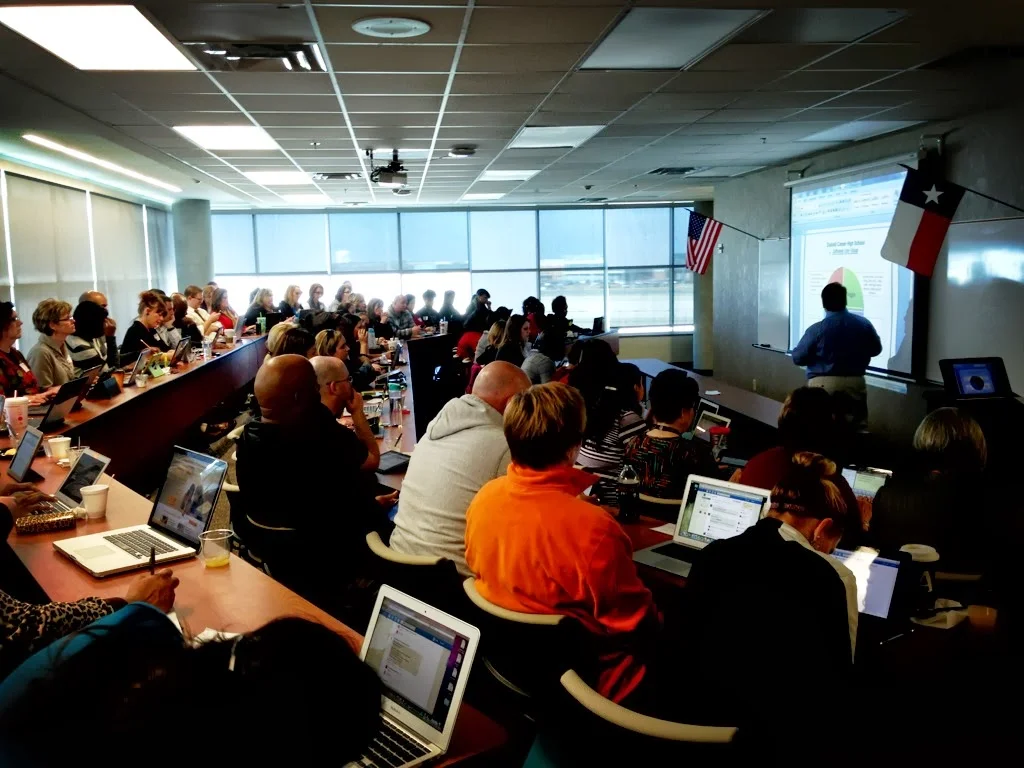
What is your 21st Century Professional Development Plan?
The increasingly competitive global workforce of the 21st century has brought on the need for students and teachers to develop new skills and competencies in our educational systems. Given that the 21st-century classroom is characterized by innovation and project-based context, schools should adopt a 21st-century teaching and learning methods that blend creative thinking skills and employs methods of instruction that integrate modern learning technologies and real-world contexts (Wan & Gut, 2011).

Teacher PD
The increasingly competitive global workforce of the 21st century has brought on the need for students and teachers to develop new skills and competencies in our educational systems. Given that the 21st-century classroom is characterized by innovation and project-based context, schools should adopt a 21st-century teaching and learning methods that blend creative thinking skills and employs methods of instruction that integrate modern learning technologies and real-world contexts (Wan & Gut, 2011). To this end, educators need to be prepared to serve students in the context of new expectations to meet the demands for a more skilled workforce. Accordingly, professional development training for teachers should incorporate innovative curriculum that includes modern technology skills, and practical experiences in a 21st-century classroom environment. This suggests that teachers should also learn about innovative curricula that incorporate critical thinking, complex problem solving, creativity and entrepreneurial thinking, communication and collaboration, innovative use of knowledge, and financial literacy.
How are you personally preparing to address your student’s need to develop 21st-century skills? What is your district’s plan to address these increasing demand for change? At this point, every school system should have educators and administrators actively participating in on-going professional development that focuses on building the capacity of district-level leadership teams, principals, and teacher leaders in understanding 21st-century skills and their importance. According to Wan & Gut (2011), every aspect of our education system including professional development must be aligned to prepare students with the 21st-century skills. Not only should this professional development instruct educators on the 21st-century skills, it should also incorporate modern ideas around technology, innovative pedagogies, and new understandings of the nature of 21st-century students. More specifically, the professional development activities should challenge new and veteran teachers to work within more significant teaching teams and more collaborative professional learning practices (Campbell, Saltmarsh, Chapman, Drew 2013).

ubiquitous technology
Teachers of 21st-century students are increasingly experiencing classrooms where the availability and use of technology by students is ubiquitous. Educational researchers assert,
… it can be argued that there is a need within education for the greater incorporation of technology, a reinvention of the way that classrooms and schools are constructed (at both the physical and relational levels) that respond to the necessary 21st-century skills. The changing nature of technology (moving from static tools for information delivery to dynamic, user developed tools of co-creation and sharing) provides a hint as to what these 21st-century skills may be (Campbell, et.al, 2013, pg. 211).
Along with the integration of technology, 21st-century classrooms are deeply rooted in innovation and problems solving (Chesbro & Boxler 2010). This change in the learning environment for teachers and students creates a need for schools to become responsive and implement new pedagogies to that go beyond the traditional classroom pedagogy (Campbell, et.al, 2013). This is also supported by Wan & Gut (2011),
“For in-service teachers, “just-in-time” preparation that includes coaching and identification of new pedagogical tools and approaches to weave 21st century skills into content areas should be made available. Ideally, teaching academies, or other special initiatives, should exist so teachers can develop and renew 21st century skills and pedagogy in structured programs” (Wan & Gut, 2011, pg. 167).
It is difficult for teachers to teach what they have not experienced or do not know. To this end, the professional development for veteran teachers should intentionally be crafted to ensure the development 21st-century skills in collaborative non-traditional environments to help them understand the needs of the 21st center learner (Wan & Gut, 2011). The closer the professional development environments are to the student learning environments, the more the sharing of practices will lead to the enhancement of student learning (Campbell, et.al, 2013).To summarize, the on-going professional development for veteran teachers should include activities that incorporate innovative uses of technology, pedagogy training that is designed for the 21st-century classroom, and opportunities for teachers to work in collaborative teams of teachers to foster the teacher development of 21st-century skills and competencies.
References
Campbell, M., Saltmarsh, S., Chapman, A., & Drew, C. (2013). Issues of teacher professional learning within ‘non-traditional’ classroom environments. Improving Schools, 16(3), 209-222.
Chesbro, P., & Boxler, N. (2010). WEAVING THE FABRIC of professional development in the 21st century through technology. Journal of Staff Development, 31(1), 48-53,70. Retrieved from http://lib-ezproxy.tamu.edu:2048/login?url=http://search.proquest.com/docview/870739723?accountid=7082
Wan, G. & Gut, D.M. (2011 ) Explorations of Educational Purpose, Bringing Schools into the 21st Century [iBooks Edition]. Retrieved from iTunes.