Teachers Must Become Artists in the Age of AI
Why preserving human meaning, culture, and empathy is now the core work of education
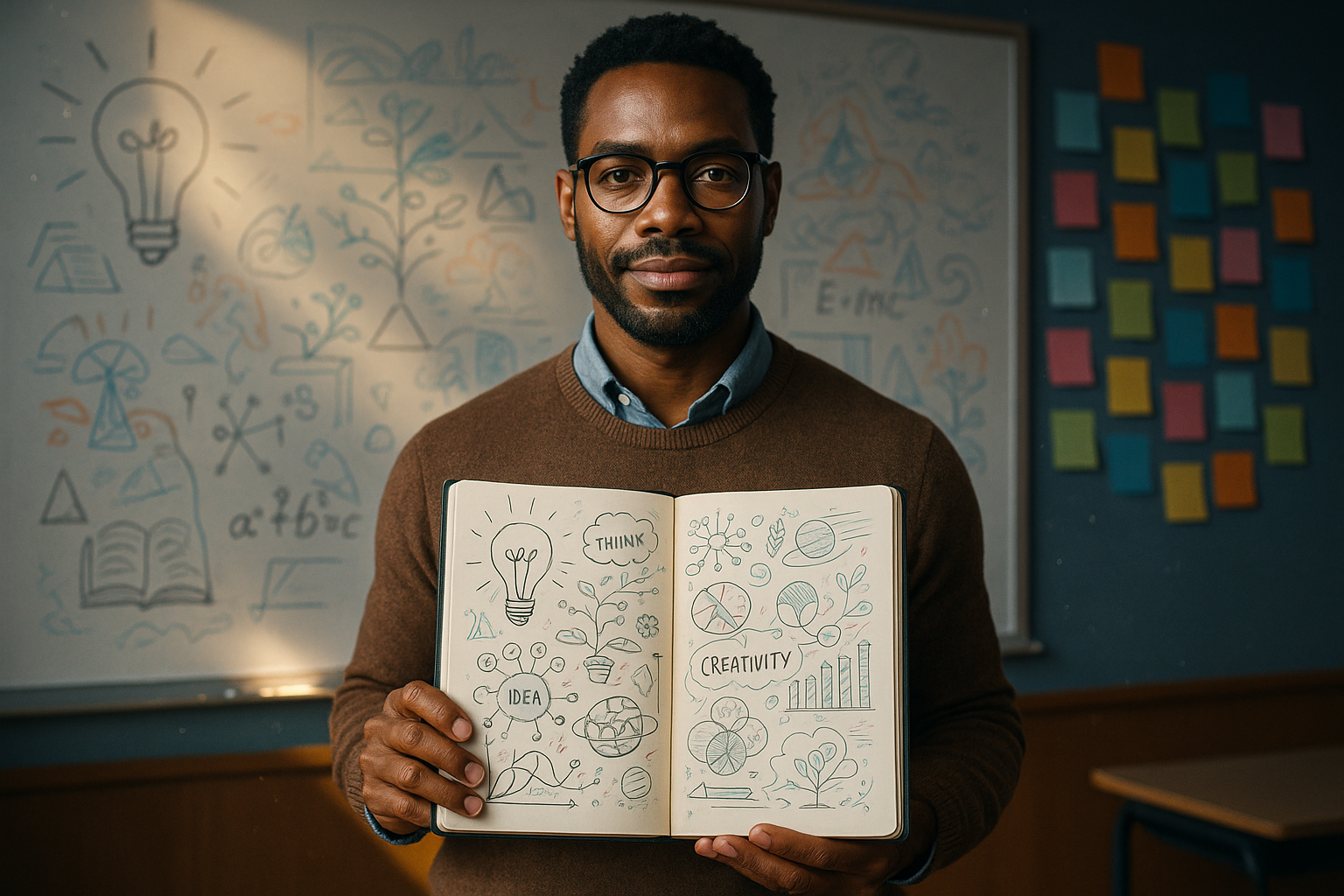
Teachers as Artists in the Age of AI
Artificial intelligence is rapidly reshaping classrooms. It can summarize texts, generate examples, personalize practice, and automate feedback. What it cannot do, at least not authentically, is preserve human meaning, culture, and empathy. That responsibility has always belonged to artists. And now, more than ever, it belongs to teachers who are willing to see themselves as artists, too.
What Artists Do That Machines Can’t
Across history, artists have served as keepers of memory and meaning. They turn lived experience into symbols, stories, and practices that people return to across generations. Through visual art, music, dance, textiles, and storytelling, artists encode language, rituals, histories, and values; creating a living record of how a community understands itself. Art is also how humans express their understanding of the world when ordinary language falls short. From cave paintings to contemporary murals, art transforms grief, joy, faith, identity, and conflict into forms we can share. Engaging with art allows us to “try on” another person’s perspective, expanding empathy and deepening understanding across time, place, and difference. It keeps tradition alive, not as a museum artifact, but as something adaptive and relevant to present struggles and future hopes. In short, artists preserve our humanity.
The Classroom as a Studio
If that’s what artists do, then educators are already closer to artists than technicians. Teachers don’t simply deliver content. They design experiences. They curate stories, texts, images, questions, and rituals that help students make meaning of the world and their place in it. In this sense, the classroom becomes a studio, one in which identity, understanding, and culture are collaboratively created. Seen through this lens, teaching is an act of composition. Educators attend to rhythm (pace), contrast (varied modes of learning), and audience (students’ identities, emotions, and needs). They improvise constantly: adjusting a question mid-lesson, reframing an idea with a metaphor, shifting energy to bring a room back to life. Like artists, they work within constraints and revise in response to their audience.
Curating Culture, Not Just Curriculum
Teacher-artists intentionally invite students’ lives into the work:
Juxtapose voices by placing canonical texts alongside contemporary music, visual art, or narratives from students’ own cultures — treating culture as living, not static.
Design for meaning-making, replacing some recall tasks with expressive ones: visual metaphors, sketchnotes, role-play, collaborative murals, or multimedia explanations.
Name the process, asking students to reflect through artist statements or learning journals so they can articulate how meaning is constructed, not just graded.
These practices don’t water down rigor. They deepen it by asking students to think symbolically, empathetically, and reflectively.
Cultivating Empathy and Belonging
Arts-based approaches also create space for perspective-taking. Story circles, tableaux, monologues, and visual narratives allow students to embody viewpoints before analyzing or debating them. Structured reflection: What might this person be feeling? What are they trying to say?, builds emotional intelligence and ethical awareness. When classrooms adopt the ethos of an arts space, creative risk is welcomed. Mistakes become resources. Students gain voice and choice in topics, formats, and audiences, whether that’s a zine, a community exhibit, or a digital gallery. They begin to see themselves not only as learners but also as co-creators of knowledge.
Practicing Your Own Teacher Artistry
Claiming an artistic identity as an educator doesn’t require grand gestures. It starts with small, intentional practices:
Share your metaphors, stories, and works-in-progress with students.
Treat lesson planning as creative composition, not script-following.
Remix ideas with colleagues, as artists borrow and build from one another.
If you want a practical framework for this mindset, Show Your Work! 10 Ways to Share Your Creativity and Get Discovered offers guidance that translates beautifully to teaching. Three ideas resonate especially well for educators:
Curate and share your influences. Make visible the books, thinkers, lessons, and experiences that shape your teaching.
Build a “cabinet of curiosities.” Collect articles, quotes, images, questions, and classroom moments that spark wonder and fuel future ideas.
Share the process, not just the product. Let students and colleagues see the drafts, experiments, and reflections, not only the polished lesson.
Why This Matters in the Age of AI
AI can assist with efficiency, generate content, and optimize systems. But it cannot replace the human work of meaning-making, cultural preservation, and connection. In an AI-saturated world, students don’t just need answers; they need help understanding why those answers matter, how they connect to human stories, and what kind of people they want to become. That is artistic work. Educators don’t need permission to claim the title of artist. It’s already embedded in the craft. When teachers embrace that identity, they protect what is uniquely human in education and model for students how intellect, culture, emotion, and creativity come together to create and build a shared future. In the age of AI, we need teachers who are not users of tools but artists of learning.
If you found this post valuable, please consider supporting my work as an independent creator.
Digital Literacy: The Non-Negotiable for College and Career Readiness

What does it really mean to prepare students for the future? Is it enough to put a Chromebook in every student’s hand and install the latest learning app? Or are we fooling ourselves into thinking “access” is the same as “readiness”?
Let’s be honest, many K–12 school systems have poured millions into technology integration, such as Smartboards, Tablets, and Learning Management systems. But here’s the uncomfortable truth: buying shiny devices is not the same thing as teaching digital literacy. In education, digital literacy is students’ and educators’ ability to use digital tools and information in ways that directly support learning, critical thinking, and responsible participation in school and society. It also prepares learners to navigate complex information environments, participate as informed digital citizens, and meet employers’ expectations for technology-enabled work.
If students don’t know which tools to use, when to use them, and why they matter, then all we’ve done is create a very expensive distraction. Now we have artificial intelligence. Teachers are scrambling to figure out what to do with ChatGPT and other AI tools, while students are already using them, sometimes wisely, often recklessly. AI is exposing the gap between access to technology and true digital literacy in real time. Do we really want students to outsource their thinking to machines without ever learning to question, evaluate, and apply the output? Do we assume students understand right from wrong when it comes to technology use? Or will we finally seize this moment to teach them the greater skills of discernment, adaptability, and responsible use of technology to help them navigate an AI-dominant world effectively?
The real challenge isn’t just giving kids technology, it’s teaching them how to learn in a digital environment. Technology is changing faster than we ever imagined, with updates completely transforming how we use it in weeks or months, not years. What won’t change is the need for students to adapt quickly, think critically, and apply tools wisely. That’s the essence of digital literacy. Without it, students won’t be college and career-ready—they’ll be left behind.
David Conley’s landmark EPIC report, Redefining College Readiness, laid this out back in 2007. He identified four critical dimensions for success:
Cognitive strategies
Content knowledge
Self-management
Knowledge about postsecondary education
Notice anything? Each of these dimensions is directly affected by digital literacy. Students who are digitally literate can deepen their content knowledge through authentic, tech-enhanced learning experiences. They can manage their time, tasks, and goals more effectively or use the right tools to compensate when they can’t. They can explore colleges, programs, and career pathways online, equipping themselves to make smarter academic decisions. And yet, here we are in 2025, still trying to figure out how to teach digital literacy. Let me be clear, digital literacy is more critical today than ever before. It is the backbone of college and career readiness. Without it, we are sending students into the world unprepared, expecting them to swim in waters we’ve never taught them to navigate. The question isn’t whether we should embed digital literacy across every layer of K–12 education. The question is, what are we waiting for?
If we want our students to thrive in the real world, and not just survive, it’s time to move past token technology integration and commit to teaching digital literacy as a core skill, not a side lesson. AI is already rewriting the rules of work and learning. If schools don’t catch up, they risk becoming irrelevant, and worse, leaving their students defenseless in a world they don’t fully understand. Anything less is educational malpractice.
If you found this post valuable, please consider supporting my work as an independent creator.
Exploring the Origins of Pi Day

As Pi Day rolls around once more, it's a perfect moment to reflect on its intriguing beginnings. What started as a niche celebration among math enthusiasts and teachers has evolved into a global phenomenon. The story begins in 1988, when physicist Larry Shaw orchestrated the very first Pi Day celebration at the Exploratorium, a renowned science museum in San Francisco. The date, March 14th (3/14), cleverly corresponds with the first three digits of pi (π ≈ 3.14). Shaw and his colleagues commemorated the day by marching in circles and indulging in pi(e), establishing traditions that continue to this day.
In 2009, Pi Day received an official endorsement as the U.S. House of Representatives recognized it as a national celebration of mathematics. Since then, it has captured the imagination of people worldwide, with schools, universities, and math enthusiasts leveraging the day to promote education and foster a love for mathematics.
Throughout my years as a math educator, Pi Day has been a cherished opportunity to engage students in math competitions and, of course, enjoy some delicious pie. Today, I continue to share the joy of mathematics with the next generation, using this special day to highlight the fun and intrigue that numbers can bring.
If you found this post valuable, please consider supporting my work as an independent creator.